


Blog
- By Admin
- 10 September, 2025
- Technology
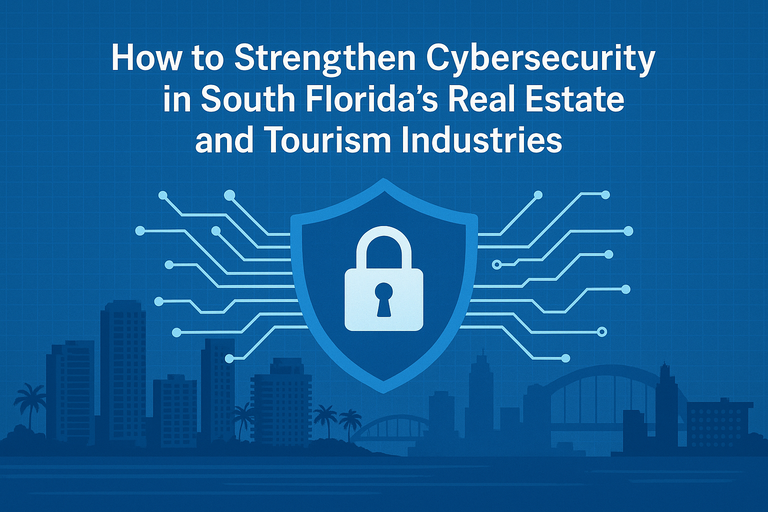
How to Strengthen Cybersecurity in South Florida’s Real Estate and Tourism Industries
South Florida’s real estate and tourism sectors are the backbone of the region’s economy — attracting global investors, travelers, and business professionals alike. But as these industries grow increasingly digital, they’ve also become prime targets for cyberattacks.
From online booking systems and digital payment portals to Wi-Fi networks and property management software, real estate and hospitality businesses handle vast amounts of sensitive personal and financial data every single day. This data is gold for cybercriminals — and a liability for businesses that don’t adequately protect it.
For owners and executives, cybersecurity is no longer just a technical priority — it’s a business imperative. Strengthening your defenses safeguards not just your systems, but also your reputation, customer trust, and long-term profitability.
Here’s how South Florida’s real estate and tourism businesses can build stronger, more resilient cyber defenses.
1. Identify Industry-Specific Cyber Risks
The first step in building a resilient defense is knowing what you’re up against. Cyber threats vary by sector, and both real estate and tourism have unique vulnerabilities:
- Real estate firms face targeted attacks such as wire transfer fraud, phishing scams involving property transactions, and breaches through document-sharing platforms or cloud-based CRMs.
- Tourism and hospitality businesses contend with ransomware attacks, fake booking websites, data breaches from unsecured guest Wi-Fi, and compromised online payment systems.
As discussed in Supply Chain Attacks: Safeguarding South Florida Tourism & Real Estate, even trusted vendors — from booking platforms to maintenance contractors — can inadvertently become gateways for cyber intrusion.
Conducting regular, full-spectrum risk assessments across your vendor and partner ecosystem is the best defense against these indirect threats. Understanding the landscape allows you to prioritize vulnerabilities and apply protection where it matters most.
2. Protect Client and Guest Data with Layered Security
A single security tool is never enough. To truly protect client and guest information, organizations should adopt a layered defense approach — combining multiple protective measures to guard against different types of attacks.
This strategy typically includes:
- Multi-factor authentication (MFA) for all staff and administrator accounts
- Network segmentation, separating guest Wi-Fi from internal business systems
- End-to-end encryption for communications and transactions
- 24/7 monitoring to detect unusual network activity or unauthorized access
Businesses that implement layered defenses experience significantly fewer successful breaches and faster recovery times, as noted in Preventing Cybersecurity Attacks.
By viewing cybersecurity as a multi-layered ecosystem — not a single line of defense — you reduce risk, downtime, and the potential for lasting reputational harm.
3. Train Employees to Spot and Report Threats
Technology alone can’t stop every attack. Your employees are often the first — and sometimes the last — line of defense.
Phishing emails, fraudulent wire transfer requests, and social engineering attempts are common in both real estate and tourism. That’s why ongoing, role-specific cybersecurity training is crucial.
Empower employees to identify suspicious emails, links, and attachments. Encourage them to report anomalies without fear of reprimand. When teams feel confident in their cybersecurity awareness, the entire organization becomes more resilient.
To make learning engaging, explore approaches like gamification — as outlined in Gamifying Cybersecurity Training for South Florida Office Teams. Interactive education helps employees internalize best practices and respond appropriately under pressure.
4. Implement Secure Payment and Booking Systems
The digital transformation of real estate and tourism has brought convenience — but also exposure. Online booking engines, mobile apps, and payment systems are frequent targets for cybercriminals seeking to steal personal and financial data.
To safeguard transactions:
- Ensure your systems comply with PCI DSS (Payment Card Industry Data Security Standard).
- Use tokenization and encryption to secure payment data.
- Verify that third-party processors maintain updated security certifications.
- Regularly perform vulnerability scans and penetration testing on payment portals and APIs.
Every secure transaction reinforces client confidence — a vital differentiator in industries built on reputation and repeat business.
5. Develop a Rapid Incident Response Plan
Even with the strongest defenses, incidents can still occur. The speed and coordination of your response often determine how well your organization recovers.
A well-crafted incident response plan outlines:
- Who is responsible for decision-making and communication
- How to isolate affected systems
- How to notify customers and stakeholders transparently
- Steps for restoring operations and conducting post-incident reviews
Testing your plan through tabletop exercises ensures that everyone knows their role and can act swiftly when a real event happens.
Our guide on Don’t Make These Incident Response Planning Mistakes details common oversights that can delay recovery — such as unclear leadership roles or outdated contact lists. Preparation today prevents confusion tomorrow.
6. Secure Vendor and Partner Relationships
Real estate and tourism rely on complex partner ecosystems — from software vendors to marketing agencies and maintenance providers. Each connection adds potential risk.
To reduce that exposure:
- Require all vendors to sign cybersecurity compliance agreements.
- Verify alignment with recognized frameworks like SOC 2, ISO 27001, or NIST CSF.
- Limit vendor access privileges based on need-to-know principles.
- Continuously monitor third-party access to sensitive systems and data.
By holding partners accountable and maintaining visibility into your digital supply chain, you can prevent the “weak link” problem that has caused so many high-profile breaches.
The Takeaway
The South Florida real estate and tourism industries thrive on trust, reputation, and seamless digital experiences. But the same connectivity that enables growth also invites risk.
By combining strong internal security controls, employee education, and vendor accountability, your business can safeguard client data, maintain regulatory compliance, and uphold the trust that drives repeat customers and investor confidence.
At Ulltium Consulting, we help South Florida organizations identify vulnerabilities, implement industry-specific defenses, and create cybersecurity strategies that align with business goals — so your company can grow securely in the digital age.
Search
Resent Post
-
 16 February, 2026
Downtime Is Predictable. Recovery Should Be Too.
-
 16 February, 2026
The Hidden Risks of DIY AI Implementation
-
 16 February, 2026
Why an IT Risk Assessment Is No Longer Optional
-
 28 September, 2025
How to Use Blockchain to Secure Legal and Financial Records
-
 25 September, 2025
How to Make Your IT Infrastructure Both Sustainable and Secure