


Blog
- By Admin
- 25 September, 2025
- Technology
How to Make Your IT Infrastructure Both Sustainable and Secure
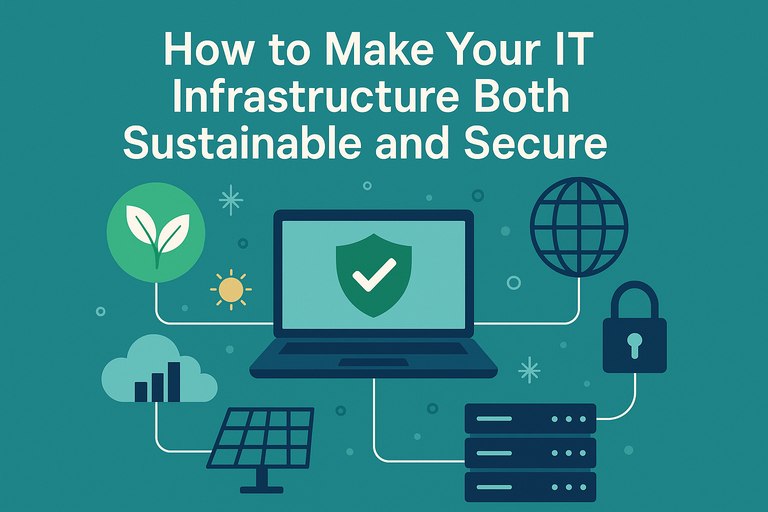
In today’s business environment, companies are being challenged to think beyond profit. They’re expected to operate responsibly — both environmentally and digitally. Yet, many organizations still treat sustainability and cybersecurity as separate initiatives when, in reality, they are deeply interconnected.
An outdated IT infrastructure doesn’t just waste energy — it also creates security gaps. Conversely, modern, efficient systems tend to be easier to protect and maintain.
The good news? You don’t have to choose between being green and being secure. A well-planned, sustainable IT strategy can reduce costs, minimize risk, and strengthen cybersecurity at the same time.
Here’s how South Florida businesses can build IT environments that are both eco-friendly and resilient.
1. Start with Smarter Resource Management
Legacy hardware and underutilized systems are double liabilities — they consume excessive energy and increase security exposure. Unsupported operating systems and outdated firmware leave critical vulnerabilities unpatched, making them easy targets for cyberattacks.
As highlighted in Streamlining Business Power Technology, consolidating infrastructure and adopting modern solutions can lead to immediate improvements in both efficiency and protection.
Consider these steps:
- Virtualize servers to reduce physical footprint and energy consumption.
- Decommission redundant hardware and move workloads to optimized systems.
- Adopt automation tools that intelligently manage computing resources based on demand.
By optimizing resource use, you lower costs, reduce emissions, and eliminate the weak points that often accompany aging systems.
2. Migrate to the Cloud — Securely
Cloud computing is one of the most effective ways to reduce your carbon footprint while improving scalability and uptime. Major cloud providers now operate high-efficiency data centers powered by renewable energy, delivering sustainability benefits that individual businesses can’t easily match.
But sustainability doesn’t override the need for cyber resilience. Poorly managed migrations can expose sensitive data or lead to costly configuration errors.
For guidance on balancing cost, performance, and security, see Cloud Migration on a Budget: Solutions for West Palm Beach Startups.
Also review Company Cloud Policy in Place, which explains how to establish internal policies governing access, encryption, and data ownership.
By treating sustainability and cybersecurity as joint priorities during your migration, your business can operate efficiently, responsibly, and securely.
3. Adopt Sustainable Device Management
Device management is where environmental responsibility meets information security. When hardware reaches the end of its life cycle, careless disposal can expose sensitive data stored on hard drives or embedded memory.
Establish a hardware lifecycle management plan that includes:
- Secure data erasure or destruction using certified tools
- Environmentally responsible recycling or refurbishing programs
- Clear documentation of device decommissioning procedures
Many hardware manufacturers and IT vendors offer buyback and recycling initiatives that ensure compliance with both environmental and data protection standards.
Integrating this process with a zero-trust architecture — where every device must be authenticated and verified before accessing the network — ensures sustainability doesn’t compromise security.
4. Optimize Energy Efficiency with Smart Technology
Energy efficiency is more than an environmental win; it’s a cyber resilience strategy. Systems that run cooler and consume less energy tend to experience fewer hardware failures and downtime events — both of which can expose systems to risk.
Practical ways to enhance efficiency include:
- Using automated power management tools that turn off idle systems
- Implementing load balancing to distribute workloads evenly
- Deploying intelligent cooling systems that reduce strain on servers and infrastructure
These optimizations lower utility costs and improve uptime — essential for both sustainability goals and business continuity.
5. Leverage Cloud-Based Collaboration Tools Responsibly
Collaboration tools like Microsoft 365, Google Workspace, and Box have revolutionized how teams share and manage information. But without proper oversight, they can also become channels for data leakage or unauthorized access.
Our post Box + Microsoft: A Powerhouse of Productivity explains how integrating these platforms strategically can streamline workflows while maintaining strong access controls.
Combine these tools with secure authentication methods, clear sharing policies, and periodic access reviews. Responsible cloud collaboration ensures your sustainability efforts extend to productivity — not just infrastructure.
6. Promote Awareness and Accountability
Sustainable IT isn’t solely about systems — it’s also about culture. Encourage employees to adopt mindful habits that save energy and protect data:
- Power down unused devices at the end of the day.
- Avoid unnecessary printing or data duplication.
- Report outdated hardware or security risks promptly.
Fostering a sense of personal accountability transforms sustainability and cybersecurity from corporate checklists into shared values.
Small actions, when multiplied across teams, make a measurable difference in reducing both carbon footprint and cyber risk exposure.
The Takeaway
Sustainability and cybersecurity aren’t competing priorities — they’re complementary pillars of modern business resilience.
By modernizing infrastructure, migrating securely to the cloud, and promoting a culture of responsibility, South Florida businesses can reduce waste, enhance efficiency, and strengthen digital protection simultaneously.
At Ulltium Consulting, we help organizations design IT environments that are not only secure and compliant but also aligned with their environmental and operational goals — because protecting data and the planet go hand in hand.
Search
Resent Post
-
 16 February, 2026
Downtime Is Predictable. Recovery Should Be Too.
-
 16 February, 2026
The Hidden Risks of DIY AI Implementation
-
 16 February, 2026
Why an IT Risk Assessment Is No Longer Optional
-
 28 September, 2025
How to Use Blockchain to Secure Legal and Financial Records
-
25 September, 2025
How to Make Your IT Infrastructure Both Sustainable and Secure